Sagaalgan: meaning, traditions and the date in 2027
Sagaalgan, the White Month festival, celebrates the lunar New Year through family and Buddhist traditions. Understanding it means distinguishing the calendar occasion, a particular family’s customs and the programme of an individual datsan or cultural centre.
What is confirmed for 2027 ↓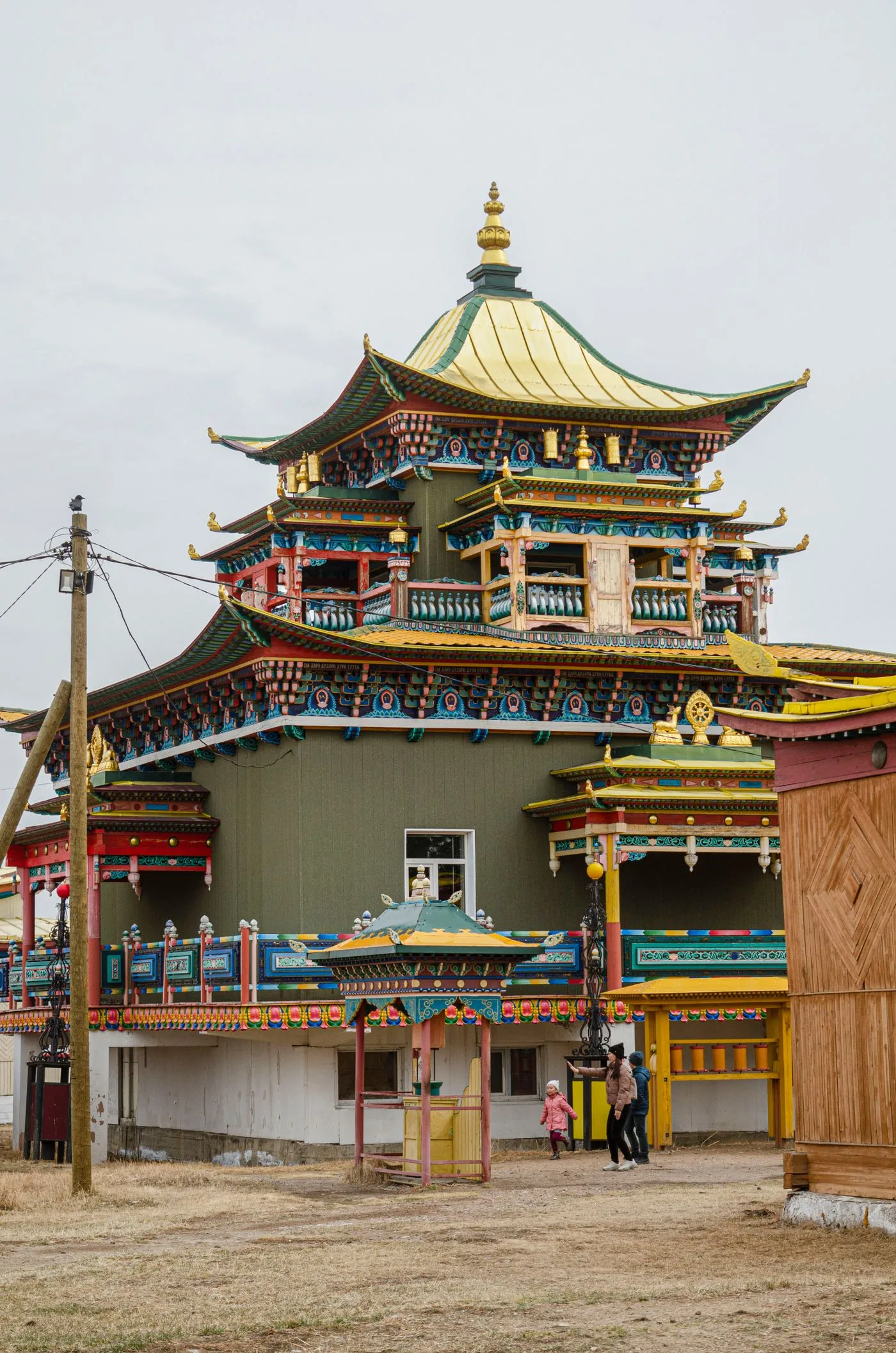
When is Sagaalgan in 2027?
For Zabaykalsky Krai, the stated date is 7 February 2027. The basis is Governor’s Decree No. 95 of 7 August 2026, whose text is available in GARANT. Its record gives the official publication number 7500202608100002. This confirmation concerns that specific region.
As of 8 October 2026, the sources checked for this article did not yield a Republic of Buryatia decree for the 2027 celebration. This does not establish that no such document exists. Confirm Buryatia’s date and individual service and event schedules before travelling.
The Russian Museum of Ethnography notes differences in calendar calculations between countries. A Chinese New Year date does not replace checking the date of Sagaalgan.
Sources: Zabaykalsky Krai Governor’s Decree No. 95, 7 August 2026 — text in GARANT · Russian Museum of Ethnography. “Sagaalgan”, 18 February 2026
What does White Month mean?
The Russian Museum of Ethnography connects White Month with a tradition of dairy foods. This explains the occasion; it does not prescribe an identical celebration in every family.
It helps to view Sagaalgan at three scales: a family gathering, a religious occasion for believers and a public celebration. These perspectives also help when reading sources: a museum account of a custom, a datsan timetable and a concert listing answer different questions.
Sources: Russian Museum of Ethnography. “Sagaalgan”, 18 February 2026

Family, elders and the festive table
In “Welcoming Sagaalgan”, Aruuna Dylgyrova, a senior researcher at the Aginsky National Museum, describes preparing the home, greeting older relatives and subsequent visits to family with gifts. These practices show the celebration through relationships: attention, hospitality and the continuity of family connections.
If you are visiting for the first time, ask your hosts when to come and what to bring. A museum account should not become a test of a family’s authenticity: ask which customs matter to them. You can record a dish’s name, recipe and serving practice in the words of the person who prepared it.
Sources: Aruuna Dylgyrova. “Welcoming Sagaalgan”. Aginsky National Museum, 11 February 2026
Encountering the temple tradition
The Russian Museum of Ethnography describes festive services as part of Sagaalgan. To visit a particular datsan, consult its own calendar: a general article cannot replace its timetable, entry rules or explanations from its community.
Before visiting, ask whether guests are welcome, where visitors may stand and whether photography is allowed. If you do not understand an action, ask your hosts. Participating in a ritual and observing it are different choices; there is no need to imitate ritual actions from a photograph.
Sources: Russian Museum of Ethnography. “Sagaalgan”, 18 February 2026
A celebration that passes on knowledge
Sagaalgan can be an occasion to learn about a family as well as gather together. The National Museum of Buryatia’s account of its 2019 “Living History. Sagaalgan” project places genealogy consultations by researchers alongside games and calligraphy. This is a documented museum programme, not a listing for 2027.
You can make a small contribution at home: preserve one story about the celebration. Who told it? Where and when did it happen? Which details does the person remember directly, and which came from elders? This keeps the storyteller’s voice without turning one memory into an unattributed claim that “everyone does this”.
Sources: National Museum of Buryatia. “Living History. Sagaalgan”, 31 January 2019
A practical starting point
Choose one setting: a family visit, a public museum activity or a datsan visit. Confirm the date and arrangements with the organisers. For a family conversation, three questions are enough: what do you remember from childhood, who passed on this custom, and what has changed today?
Obtain participants’ consent before recording a conversation or publishing a photograph. Preserve the storyteller’s name in the form they permit, together with the conversation’s date and place. Private details can remain in the family archive: preserving knowledge does not require immediately putting everything online.
Preserve one story from your family
Our family-history route includes conversation prompts and a personal-record worksheet. Complete it locally and decide with the storyteller what can be shared.
Start a family record →Continue exploring living culture →
Sources and scope
This is an introductory editorial overview based on museum materials and the published text of a decree. It is not a study of every regional or family tradition. It has not received independent scholarly review.
- Zabaykalsky Krai Governor’s Decree No. 95, 7 August 2026 — text in GARANT
The 7 February date concerns Zabaykalsky Krai. The official portal was unavailable during preparation; the legal database’s text was used.
- Russian Museum of Ethnography. “Sagaalgan”, 18 February 2026
Overview of the calendar, household customs and temple traditions.
- Aruuna Dylgyrova. “Welcoming Sagaalgan”. Aginsky National Museum, 11 February 2026
Paragraphs on preparing the home, greeting elders and family visits.
- National Museum of Buryatia. “Living History. Sagaalgan”, 31 January 2019
Report of a past event: genealogy, calligraphy and games.
Photography: Pexels License; photographers and originals are linked in the captions. Photo terms differ from those applying to the project’s own texts. Pexels License ↗
Report an error or suggest a source →